
Is It Worth Flying to South Africa for Just 14 Days?
Absolutely 🙂 If you’re willing to take one domestic flight, you won’t have any stress at all. In 14 days you’ll get a real overview of South Africa, and you’ll definitely want to come back.
Ideally you’d have three weeks, but even in 14 days you can book with us for around €4,650 per person (calculated for a couple travelling together — it gets cheaper the more people you are). That price includes the international flight, one domestic flight, accommodation (and meals at the accommodations), car, guiding, and driver. Drive times can be hard for newcomers to the country to judge, since delays that are typical here can crop up.
Anyone working a regular job usually has a maximum of 14 days off at a stretch. Sometimes you can plan cleverly around public holidays and long weekends — we know the game. South Africa has a clear advantage as a holiday destination: the time difference to Europe is at most one hour, and in the European summer we’re in the same time zone. Which brings us to the seasons.
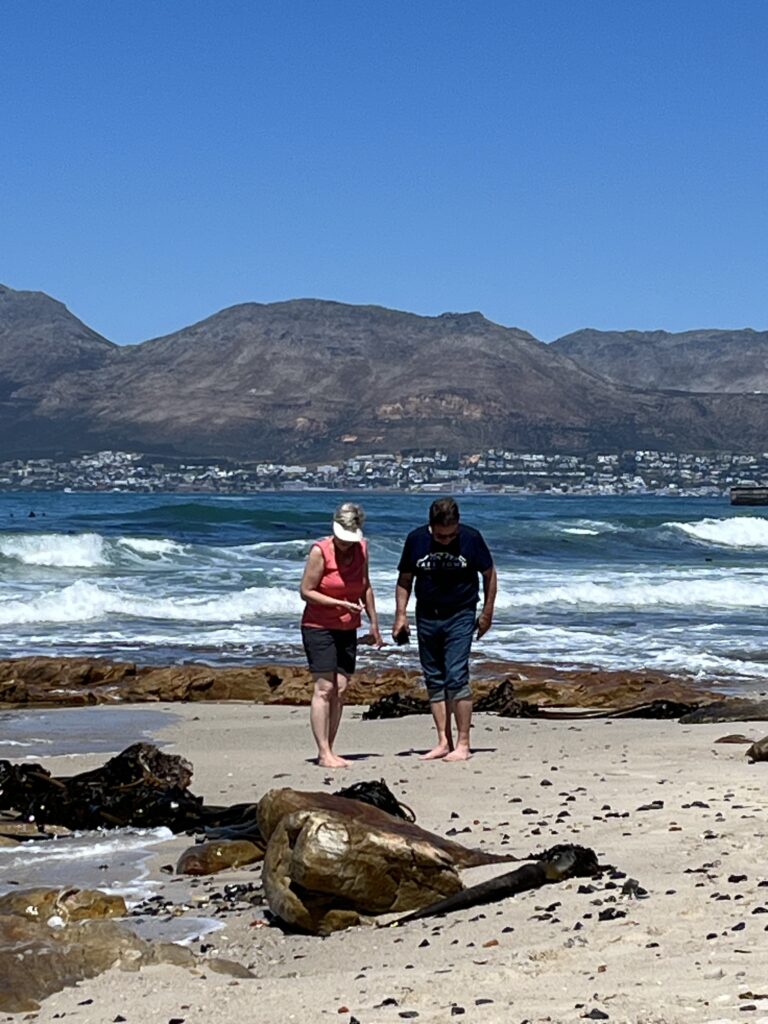
When Is South Africa at Its Best?
That question isn’t easy to answer. Take a look at our article on the best time to visit, and you’ll get a first impression. The Western Cape is a bit unpleasant June through September, but great for hiking, since it’s not too hot and you don’t have to start climbing the mountain at 4am just to avoid melting.
December is simply packed. South Africa’s longest school holidays run from mid-December to the end of January — pretty much everywhere is busy.
Durban has pleasant winter weather (June–September), though it’s not to everyone’s taste.
The Garden Route is really lovely during the shoulder seasons — October/November and April/May. If you want to go climbing in the Cederberg, your best bet is local winter, when the rock is easy to grip (December through March, you’ll burn your fingers on it).
Summers in Johannesburg are hot and humid; in the shoulder months and winter, nights can get noticeably cold, though it rarely rains.
The Drakensberg and Lesotho can see snow in winter, which of course has its own special charm.
On the West Coast north of Cape Town, myriad wildflowers bloom in August and September — also stunning.
Which Route Suits You?
Most visitors to South Africa want to marvel at the incredible wildlife — of course. But anyone who’s been here a few times knows that’s only a fraction of what the country has to offer.
The classic of all routes is the Garden Route — this stretch has its own appeal year-round, but especially from January to May. Depending on the month, you’ll start or end the trip in Cape Town and spend 4–5 days in the Mother City to get a real feel for it.
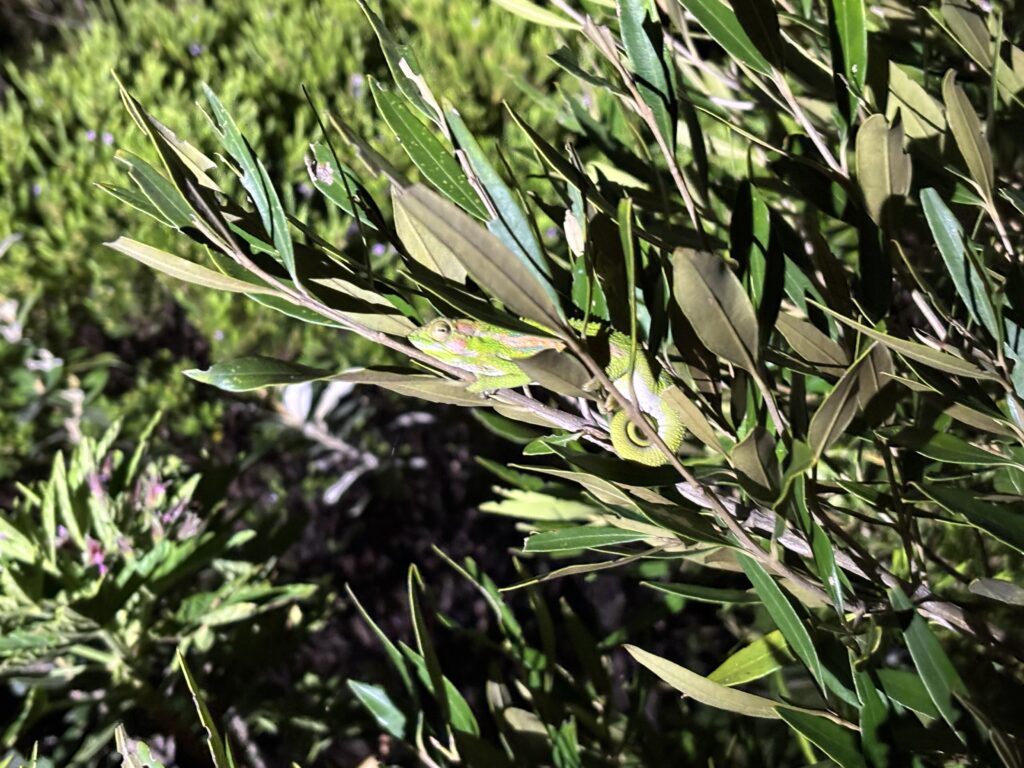
This is where a local tour operator really matters — local is lekker! Of course you can chase down every spot mentioned on Instagram and elsewhere on your own, but only someone who actually lives here can give you a truly personal experience. On our last tour, for example, a friend and I took our guests out chameleon-spotting at night — an unforgettable and genuinely unique experience, since you need to know exactly where the chameleons hang out to find them — or we’ve taken guests to a live concert, and so on.
The Garden Route, Extended
You can drive from Cape Town to Gqeberha or the other way around. Extending the route further northeast is also a lovely idea. Why not start in East London? That stretch isn’t technically the Garden Route anymore, but it’s still relatively undiscovered by tourists. Which means: let’s keep this between us — lower prices and more relaxed travel.
From East London, you take the R72 along the coast, detouring down side roads to the sea wherever you like. This coast is a paradise for horse riders, and you could easily spend a few days here already.
Then spend a night in Kenton-on-Sea at one of the three Big Five game reserves there and experience safari without any malaria worries. Or maybe you’d rather push on to Gqeberha (Port Elizabeth) on day one? Addo Elephant National Park is right on the way, as is Shamwari, another Big Five reserve. From there it’s an easy drive on through Jeffrey’s Bay and St. Francis to Storms River, where you can hike, kayak, and bungee jump.
You might fancy a detour into the Baviaanskloof mountains? That’ll cost you at least 3 days, and you won’t see many other travellers there.
Plettenberg Bay is always worth a stop and an overnight stay. Barringtons on Piesang Valley Road is our tip for dinner, and after a hike on the Robberg Peninsula, the scones at Ouland Royale Magical Barn taste absolutely out of this world!
Old Nick is a lovely rest stop — treat yourself to a linen pair of pyjamas from Mungo, who have their weaving mill right there!
In Knysna, the Heads are of course the highlight. The natural harbour entrance is a real visual treat. You could easily spend days here too, but passing through is lovely as well.
Staying overnight in Wilderness is wonderful, because during whale season you can watch these majestic animals right from your bed. Then a coffee in the little town (you can walk there!), and dinner at Salinas is also just a short stroll from the hotel we’ll book for you there ;-).
From Wilderness, you’ll need to decide whether to continue via Mossel Bay or Oudtshoorn. So we’ve split the route into two options here.
Day 1: Cape Town to East London (flight), then 2.5-hour drive to Kenton-on-Sea, or
Day 2: on to Kenton-on-Sea, 2.5-hour drive
Day 3: relax in Kenton, or you’ve booked into one of the game reserves
Day 4: game reserve, or on to Addo Elephant National Park, 2-hour drive
Day 5: Jeffreys Bay or St. Francis Bay, or still in Addo — 3-hour drive
Day 6: Storms River, 1.5-hour drive
Day 7: Storms River for hiking, kayaking, and the like
Day 8: Plettenberg Bay, 1-hour drive
Day 9: Wilderness, 1-hour drive
Via Oudtshoorn
It’s a fair bit of driving, but worth it!
The hinterland — the Little Karoo — is breathtakingly beautiful. Wide skies, dead-straight roads (the R62), ostriches, the Cango Caves, and meerkats are all waiting to be discovered. You might even want to push on into the Great Karoo and over the Swartberg Pass? Prince Albert, at the northern end of the Swartberg Pass, is a charming little town with great coffee milkshakes. From Prince Albert you take the N1 to Laingsburg, then over the Seweweekspoort Pass to Barrydale, where I’d recommend spending the night. Again: fantastic coffee milkshakes at the Blue Cow Café, sensational bread at the Karoo Hotel, and the food at Mez Karoo Kitchen is simply outstanding. The nicest place I’ve stayed there was The Karoo Moon House and Cottage on Hill Street — really stylish. The towels at that guesthouse come from the local weaving mill, and you can buy their MUD skincare on the R62 at the eastern edge of town.
You’ve probably guessed: I’m a Barrydale fan.
The Tradouw Pass then takes you over Suurbraak [ˈsœːrbraːk] — the double ‘u’ is pronounced somewhere between a German ‘ü’ and an ‘i’ — on to Swellendam. Bontebok National Park isn’t especially remarkable, but an afternoon in the park along the Breede River is still worthwhile. If you take the road to Bredasdorp, you’ll reach the southernmost point of the African continent: Cape Agulhas.
The fishing villages of Arniston and Struisbaai are lovely, and then it’s really time to head to Cape Town! But… Stanford (croissants at Ou de Meul) and Hermanus are still in between, and both are worth a stop, especially during whale season. In Hermanus, you don’t even need to get out on the water to see whales between June and November — the beautiful 6.8km coastal path, completed in 2025, gives you views of these marine giants right from the shore. And of course, you have to stop to eat at Dutchies at Grotto Beach. Lunch, dinner, or both 🙂
Day 10: Oudtshoorn/Prince Albert — 1-hour drive from Wilderness to Oudtshoorn, or 3 hours to Prince Albert
Day 11: Barrydale — 4.5–5 hours from Laingsburg over the Seweweekspoort Pass
Day 12: Cape Town — 5-hour drive from Barrydale via Cape Agulhas to Cape Town
Day 13: Cape Town
Day 14: Cape Town
Via Mossel Bay
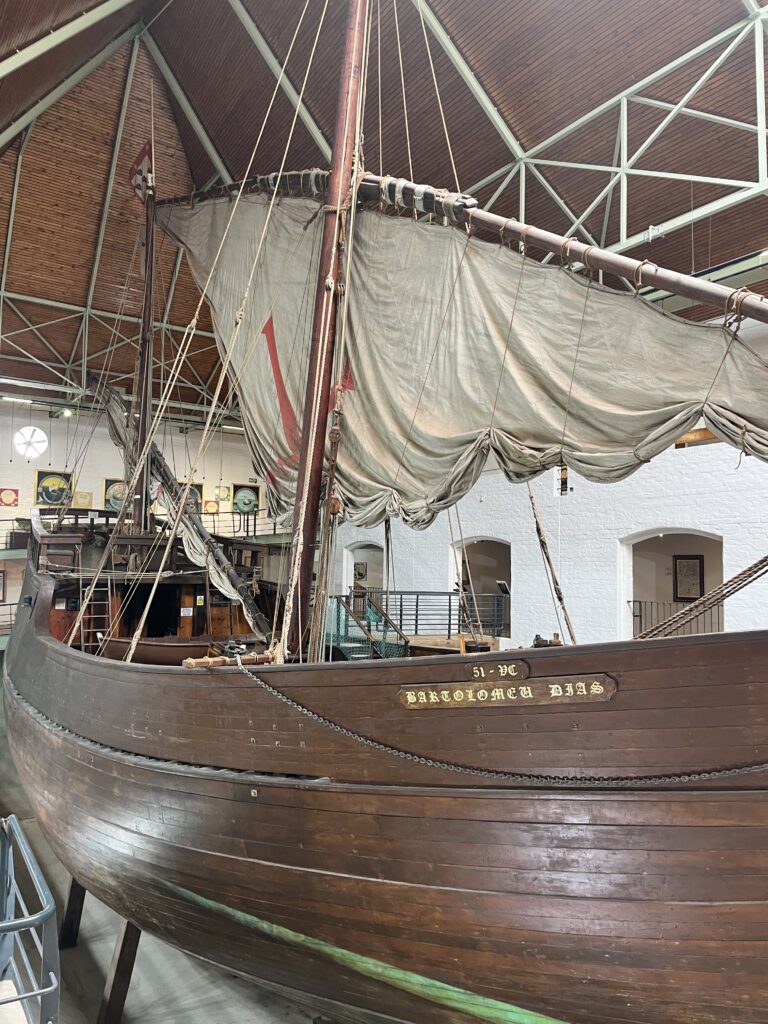
Full disclosure: I’m not a huge fan of Mossel Bay. The Bartolomeu Dias Museum Complex is pretty cool, though — it has a replica of Dias’s ship and just about every kind of shell ever found in South Africa. For shell fans: an absolute must!
You can also spend the night in a decommissioned train carriage at Santos Beach, and book a zipline in Mossel Bay. Speaking of ziplines: the best one in the country is up north near Tzaneen. There, you zip back and forth across the river 11 times — genuinely beautiful.
Mossel Bay has a fair amount of petrochemical industry, so it doesn’t smell great, and the view isn’t exactly stunning either.
Back on the N2, you can then follow the same route described under the Oudtshoorn option above.
Day 10: Wilderness to Mossel Bay, 1-hour drive
Day 11: Mossel Bay to Cape Agulhas, 4-hour drive
Day 12: Agulhas to Cape Town, 3-hour drive
Day 13: Cape Town
Day 14: Cape Town
How Do You Keep the Costs Down on a 14-Day Garden Route Trip?
Accommodation is of course one way to keep your trip’s costs down. This route genuinely has everything, from budget to top-end. If you buy a tent and travel from campsite to campsite, it’s a really affordable option that can be a lot of fun too.
Among fixed accommodations, especially in Wilderness and Plettenberg Bay, there’s barely a ceiling at the top end, but there are also affordable guesthouses.
Airbnb is of course always an option, but honestly, once I realised how unaffordable it’s made the rental market for locals, I stopped thinking it’s a good idea.
A local alternative to Airbnb is Lekkeslaap.
Eating out in South Africa is comparatively cheap, and at the time of writing (December 2025) you can expect to pay around 300 ZAR for a good meal with a glass of wine.
In our next post, we cover ideas for a 14-day South Africa road trip that includes Kruger National Park.