
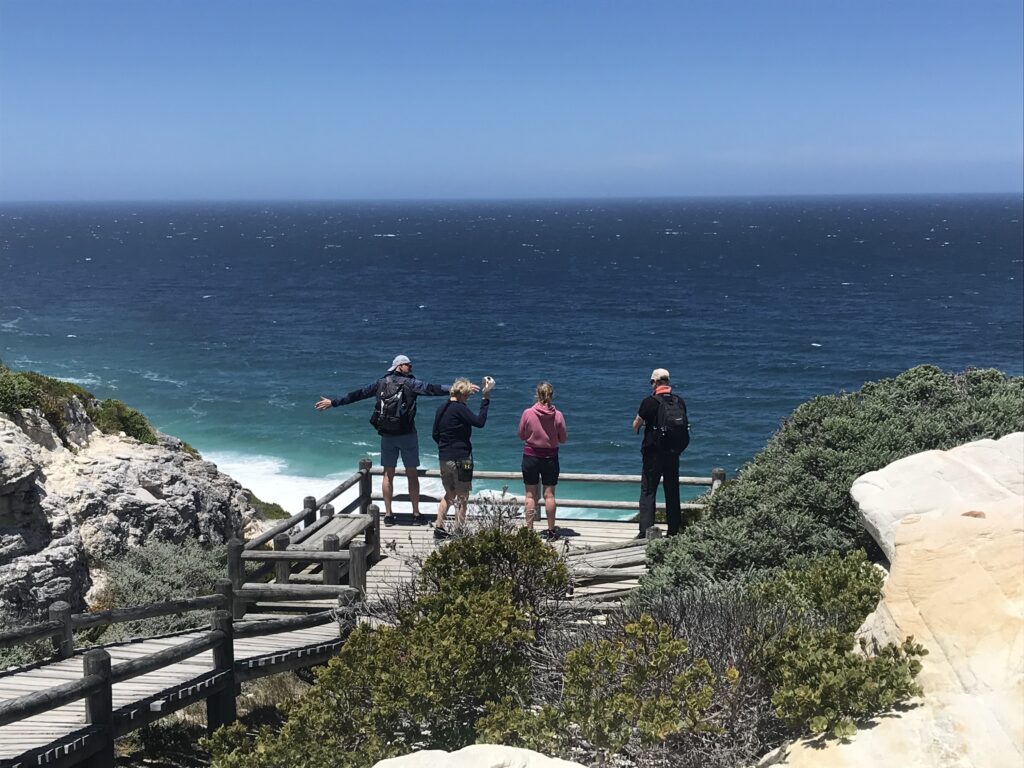
There’s a classic South African direction: “At the next robot, you take a left.” Erm, right — and where exactly would I find this robot? Robot is South African for traffic light.
It’s not just the vocabulary that trips you up at first, but also local customs and rules — or the lack of them. But let’s start with the vocabulary. Here’s a definitely incomplete list of things that have their own special name here:
- Chommie, Bru, Bro, Cuz, Boet — mate/buddy
- Howzit? — how’s it going
- Bakkie — pickup truck
- Tekkies — sneakers
- Braai — barbecue
- Gatvol — fed up with something
- Kiff — cool/awesome
- Babbelas — hangover
How Time Works Here
Cape Town works differently from Johannesburg in this respect. Asking again is always fine, always okay. Maybe mention that you’re a foreigner — then South Africans know what you mean. Because now, now-now, and just now are all wonderfully elastic concepts. “I’ll get them (the documents) to you now” can mean you’ll have them in the next 5 minutes — or that you’ll need to follow up again in a week.
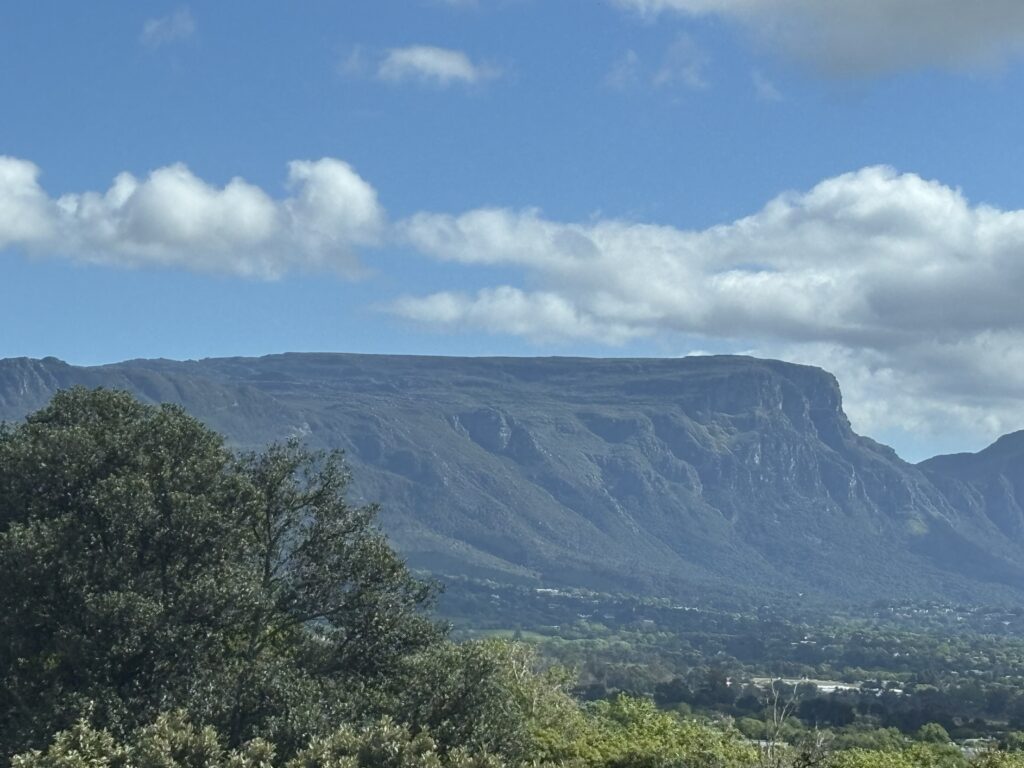
The Incomparable Table Mountain
…is stunning. No question. Not many cities have a mountain right in the middle of them. But you shouldn’t underestimate it, or you risk becoming an ALG (another lost German). And the fact that there’s an acronym for this tells you something: it’s a real thing! American tourists tend to think they can climb Table Mountain in flip-flops, and German visitors are often so sure of themselves that they won’t take advice. Sure, these are clichés, but clichés come from somewhere. Please, please be honest about your fitness level and choose your route (there are several) on the Hoerikwaggo trail network sensibly, matched to your abilities. Pay attention to the terrain! But the most important thing, to my mind: coming from the northern hemisphere, it’s completely normal to mix up your directions — that’s totally legitimate. Bring your phone, and check where you’re actually walking.
Plan for the possibility that the cableway isn’t running, and that you’ll need to manage the descent on foot too.
Water
Water is life — it’s the most precious thing we have on this planet. Without water, nothing works. South Africa is a developing economy. We can’t keep up! Tourists arrive here seasonally, and the country needs them to survive, but they also put pressure on the very nature they came to see.
My own personal request to you: use as little water as possible. Showers: keep them short. Do laundry as rarely as you can. Drinking from the tap is questionable for European stomachs anyway. Wash your car? Why bother? If you see water running down a street somewhere, this isn’t Paris, where that’s just how gutters get cleaned — it’s a burst pipe somewhere. Report it. Tell a local who looks reliable. Take a photo (that always helps). In 2018, Cape Town had a “Day Zero” scenario, and something like that plays out all over the country. At any given time, some region is fighting over water. We need reforestation (things burn down regularly here too!) and water awareness.
Safety in South Africa
Cape Town has become safer over the past 10 years. Pretoria is more unsettled, Johannesburg is busier. Unpredictable acts of cruelty do sweep over the country from time to time like a rogue wave — that’s a fact. Where there’s a lot of poverty, there’s crime. But crime happens most often in the townships, fuelled by xenophobia. Jobs for unskilled workers are limited, and people from neighbouring countries (Zimbabwe especially) are often better trained and more cooperative. That leaves black South Africans falling behind, and some “take revenge” through violence. None of it is pretty…
- Don’t stand around holding your phone in your hand — my daughter had hers snatched right out of her hand just 3 weeks ago (Dec 2025).
- Don’t wander dark streets at night
- Johannesburg has its own, tougher rules, which I honestly don’t know well and don’t especially want to find out about firsthand
- Don’t go out alone — especially not hiking (remember: ALG)
- If you don’t feel safe, it’s because it isn’t safe! Relearn how to trust your gut
- If you’re driving your rental car at night, stick to routes other people are using
- Leave NOTHING in the car — not even a water bottle — anywhere
- Book with us — and you won’t need to take any of these precautions yourself
Tipping
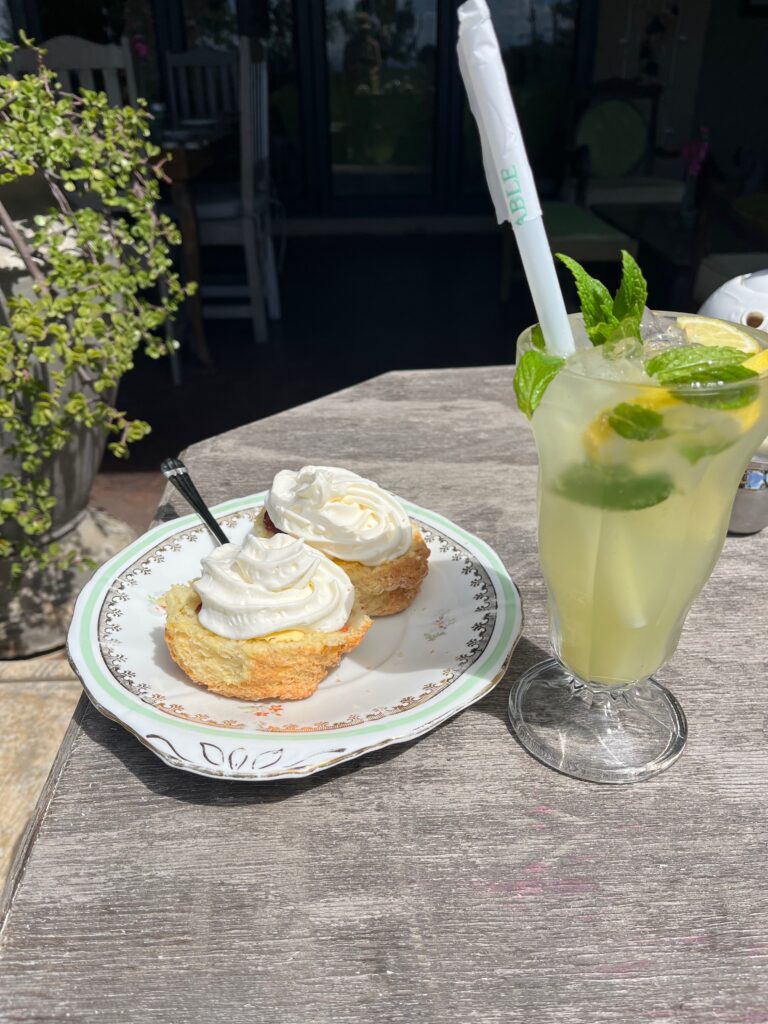
It can’t be said often enough: tip, and tip generously. Even the friendly waitress at Blondies doesn’t earn an hourly wage!!!! Dishwashers in the kitchens earn around 15 ZAR/hour… The people who can actually make a decent living are the car guards in supermarket parking lots — but only if every driver spares 10 ZAR. That’s about 50 cents… The photo, by the way, shows the best scones in Plettenberg Bay, served at Ouland Royale Magical Barn.
- Car guard: 10 ZAR
- Petrol attendant who cleans your windscreen and checks oil, water, and tyre pressure: 20 ZAR
- Your guide, your waiter: at least 10%
- If you’re shopping somewhere (farm stalls like “Metro Organics” in Noordhoek village, for example) and your bill comes to 126.35 ZAR, just leave 130 rand and say “put the rest in the tip jar, please”
Friendliness
The baseline attitude of people in this country is friendly. That’s important to know, and as a German myself, I can and will say this: Germany is not a friendly country. Sure, you can smile at people and they’ll smile back. But most people there aren’t used to friendliness anymore and find it intrusive. May South Africa hold on to this basic friendliness — you can help!
Here in South Africa, you can let your smile shine again — unfiltered. No more awkward conversations with dubious characters — just a smile, and move on. A simple human-to-human signal: “I’m good, hope you’re good too.”
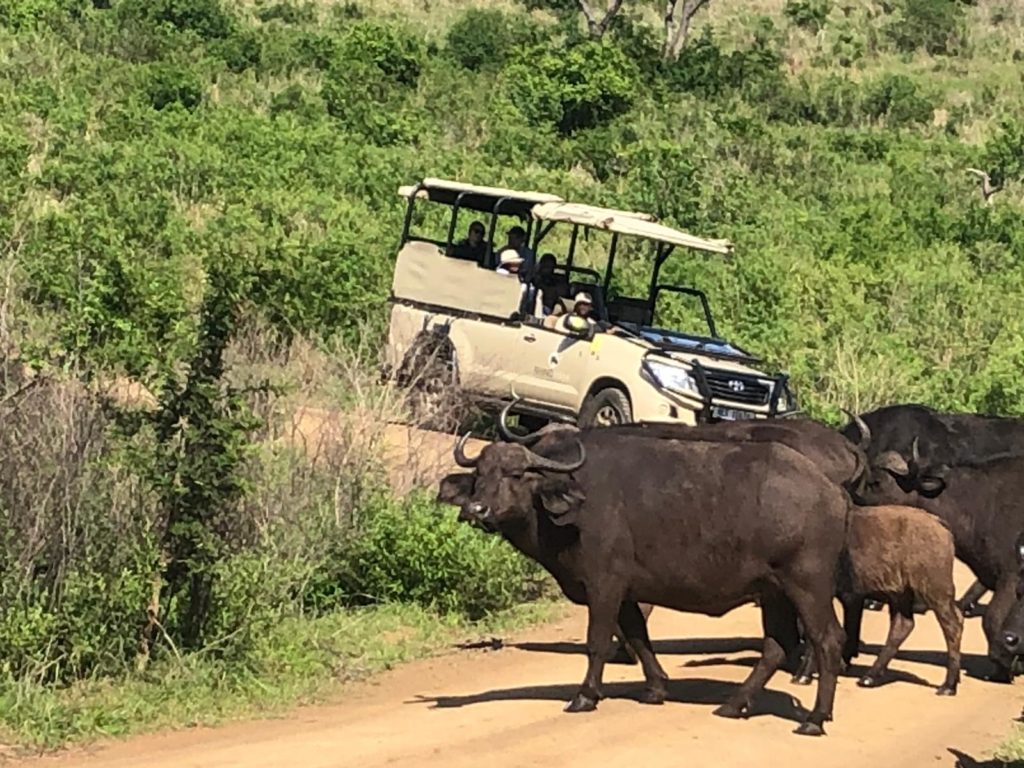
Safari
Here too, your guide/ranger gets a tip ;-). Please don’t visit parks that are structured like zoos. Aguila is the ultimate cautionary example here. I don’t want to damage anyone’s reputation, but please do look into things like canned hunting and illegal breeding of big cats, and wherever you have even the faintest suspicion: please stay away. Breeding animals so that the mother can later be shot in a cage in front of her own cubs by a more-or-less-skilled hunter is not conservation effort — it’s cruel, and it shouldn’t be supported.
Animal populations are also managed in Namibia, Botswana, and South Africa. Elephants are currently overrepresented and thousands are culled. That’s the sad reality of a world where one species keeps expanding. I have no idea whether money is made from this, but what is certain is that organisations like the Safari Club don’t exactly attract ethically evolved members (one headline on their homepage today, 12 January 2026: “Black bear hunting is how to celebrate 44 years of marriage”).
If you want to see animals, you can do so malaria-free in the Western and Eastern Cape, and of course also in the southern part of Kruger National Park. Sanbona Wildlife Reserve is one such reserve. Across 62,000 hectares, a game drive is still a genuine game drive — the anticipation of the search is the whole point. The cool morning or evening air, the smell of earth and bush, the rising or setting sun, the chirping of cicadas… wasn’t that a tail-tip just now? The essence of safari isn’t seeing or finding — it’s searching. The tension is the experience. Spotting a frustrated lion in a 200-square-metre enclosure is not an experience. We don’t book dubious animal parks, just saying.