
Kruger National Park is always wonderful
This 14-day route is for anyone who wants to experience South Africa intensely, without changing location every single day. You start in Johannesburg, drive via Tzaneen into Kruger National Park, and spend four nights there (north to south). From there it’s either the Panorama Route around Graskop, or straight on to eSwatini (Mlilwane). To finish, KwaZulu-Natal awaits with St Lucia (iSimangaliso Wetland Park), and depending on what you fancy, Sodwana Bay, Hluhluwe-iMfolozi, or a short detour into the Drakensberg, before you wind the trip down in Durban.
If you land early in Johannesburg, you can already push some distance north on arrival day. If you land later, it’s worth spending your first night in Johannesburg (ideally at the airport), so the trip starts relaxed rather than rushed.
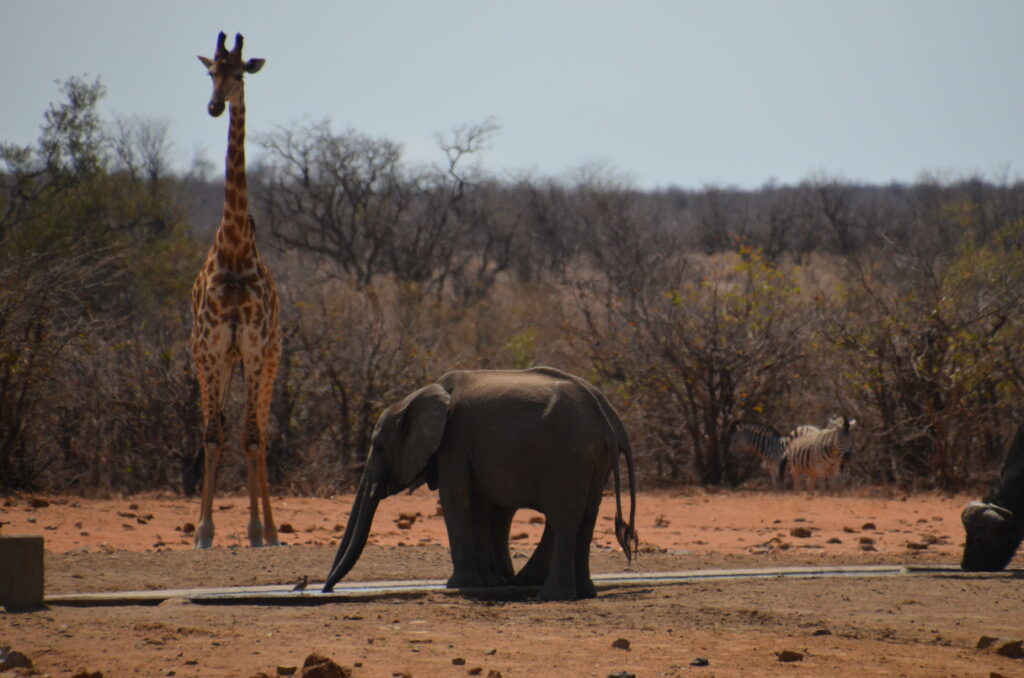
Quick Facts
- Start: Johannesburg
- Duration: 14 days / 13 nights
- Safari focus: 4 nights in Kruger (north to south)
- Nature upgrade: eSwatini’s Mlilwane (2 nights)
- Coast: St Lucia (2 nights), optionally Sodwana or Hluhluwe
- Finale: Durban, or the Drakensberg as an alternative
- Optional in Kruger: ranger game drives, night drives, morning walks
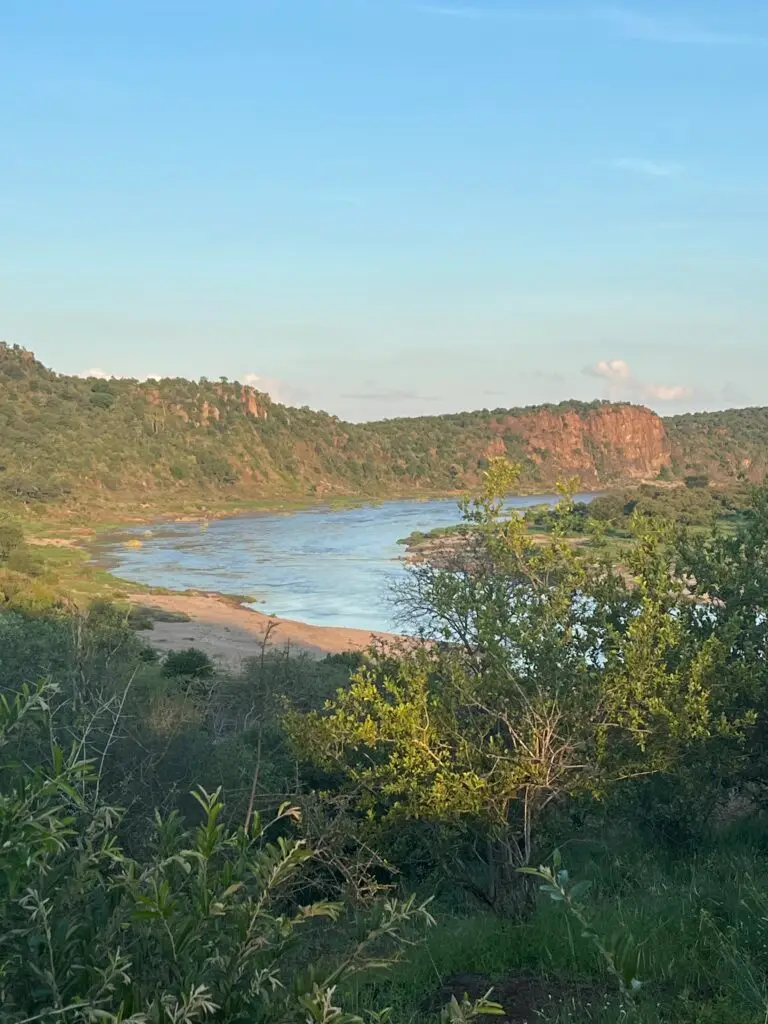
Day-by-day plan
| Day | Route and base | Overnight | Highlights | Optional |
|---|---|---|---|---|
| 1 | Arrive Johannesburg | Johannesburg, or push on (depending on arrival time) | Settling in | Overnight for late arrivals |
| 2 | Johannesburg to Tzaneen | Tzaneen | Easing into the Lowveld | Zipline if timing allows |
| 3 | Tzaneen into Kruger (North) | Kruger North | First safari, quiet in the north | Evening ranger drive |
| 4 | Kruger North | Kruger North, or transition toward central | Finding your safari rhythm | Morning walk or night drive |
| 5 | Kruger Central | Kruger Central | Different landscape, different dynamic | Evening ranger drive |
| 6 | Kruger South | Kruger South | Classic Kruger, your last full safari day | |
| 7 | Exit Kruger toward Graskop OR straight to eSwatini | Graskop | Entering the Panorama Route | God’s Window, if the light is good |
| 8 | Graskop highlights, then on to Mlilwane | Mlilwane, eSwatini | A complete change of pace from safari | Bourke’s Luck Potholes |
| 9 | Mlilwane, full day | Mlilwane, eSwatini | Nature, slowing down, buffet dinner | Horse riding, hiking, pool |
| 10 | Mlilwane to St Lucia | St Lucia | Arriving by the water, easy evening | Side trip into other eSwatini parks |
| 11 | St Lucia and iSimangaliso | St Lucia | Wetlands, beach, wildlife | Estuary boat tour, beach walk at Cape Vidal |
| 12 | St Lucia to Sodwana OR Hluhluwe-iMfolozi | Sodwana or Hluhluwe | Coast or an extra safari | Snorkelling or a game drive |
| 13 | Toward Durban | Durban | City-and-coast finale, winding down | Drakensberg instead of Durban |
| 14 | Depart Durban | — | Journey home | Optional extension |
Variant without Graskop: go straight to Mlilwane on day 7, and use the “night you’ve gained” for Sodwana, Hluhluwe, or the Drakensberg (whichever you’re after — more sea, more safari, or more mountains).
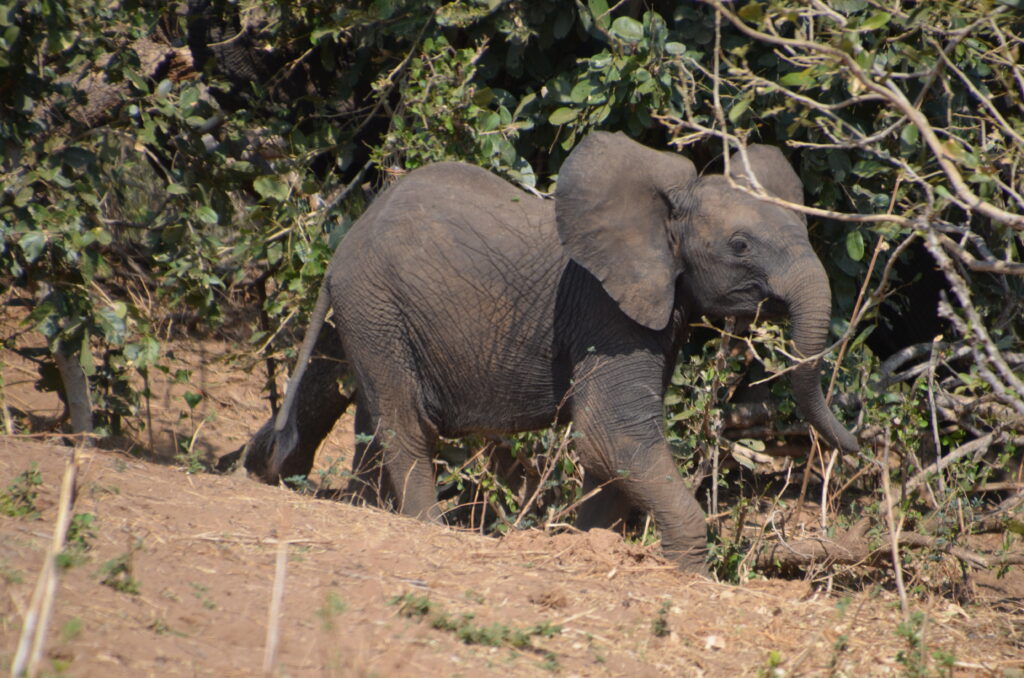
Why you should plan four nights in Kruger
Many routes make the mistake of treating Kruger as “one stop.” In reality the park is a whole world of its own. When you book a safari with us, we want to know exactly what you have in mind, so you’re never disappointed.
Four nights give you:
- enough time to actually live the safari day-rhythm (out early, rest at midday, out again later — the same way the animals do it)
- the chance to really savour north to south, instead of just “driving through”
- room for optional highlights like night drives or morning walks (depending on what the camp offers)
Kruger north to south: how to use the time well
So the safari doesn’t turn into a race for kilometres, this logic tends to work especially well:
1) Starting early is best
The best hours are almost always morning and late afternoon. Plan the middle of the day as a break. The animals do the same, so it’s not wasted time — no FOMO needed.
2) Less distance, more time watching behaviour
If you drive slower and deliberately combine loops, you see more. A lot of sightings don’t come from “luck” — they come from patience and timing.
3) Ranger drives as an upgrade
Self-drive works very well in Kruger. A ranger game drive can be a strong addition though, because rangers often bring more context (reading tracks, behaviour, being in the right place at the right time) and share sightings with each other over the radio.
4) Night drives and morning walks — organised only
Night drives and walks are fantastic, but only where they’re officially offered and led by qualified rangers. That’s the safe, sensible setup.
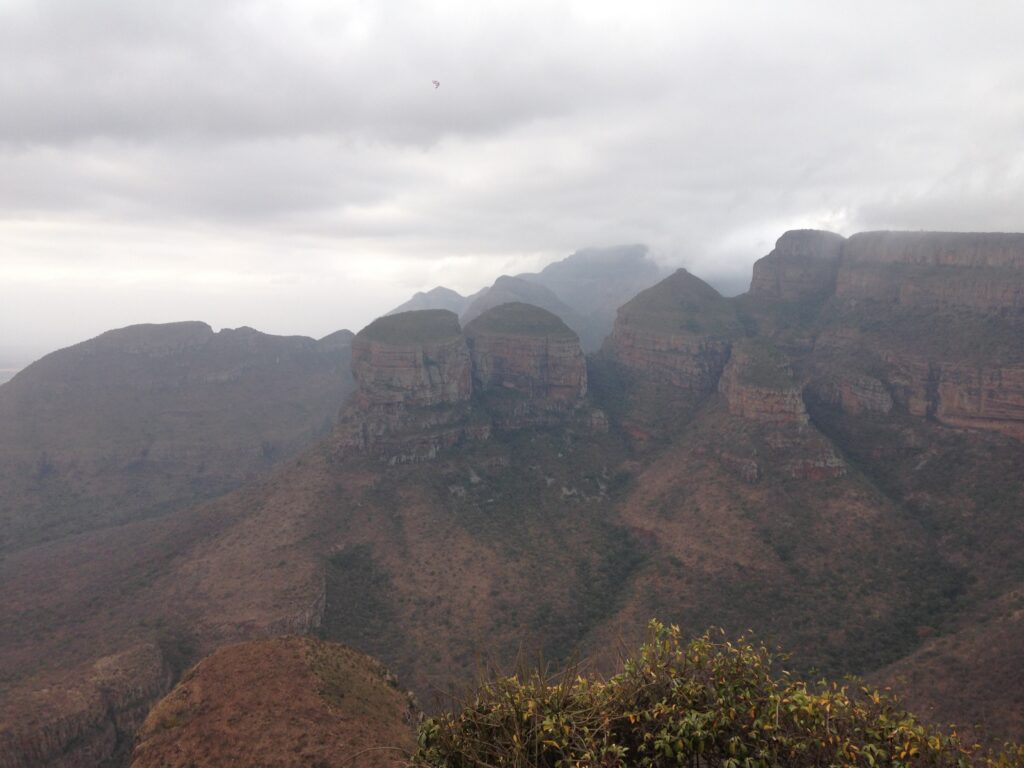
Panorama Route, Graskop
If you decide on Graskop:
- God’s Window is only worth it when the light is good and visibility cooperates — otherwise you’re just staring into a wall of mist
- Bourke’s Luck Potholes is fun — you can also spot the ‘Three Sisters’ rock formation from there
- consider one viewpoint loop rather than “stopping at every single one”
If time is tight, or you’d rather have “more nature, fewer viewpoints,” driving straight to eSwatini is often the better call.
eSwatini’s Mlilwane
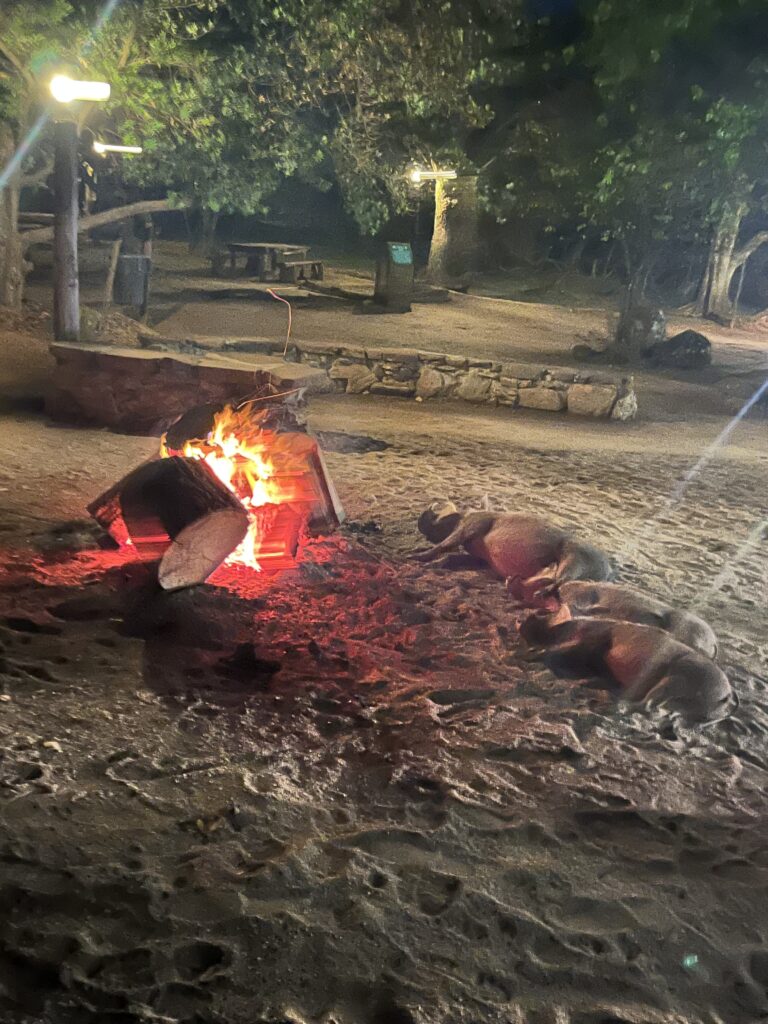
Mlilwane is the perfect change of pace after Kruger: quieter, greener, more relaxed.
- Day 1: arrive, a walk, the pool, buffet dinner
- Day 2: horse riding or hiking, an optional trip to other parks, another relaxed dinner in the evening
This is often where the feeling kicks in: “Now I’m really on holiday.”
St Lucia and iSimangaliso — close to nature and full of life
St Lucia is ideal for two nights. You can combine, very comfortably:
- wetlands atmosphere
- beach and coastal air
- an optional boat tour on the estuary
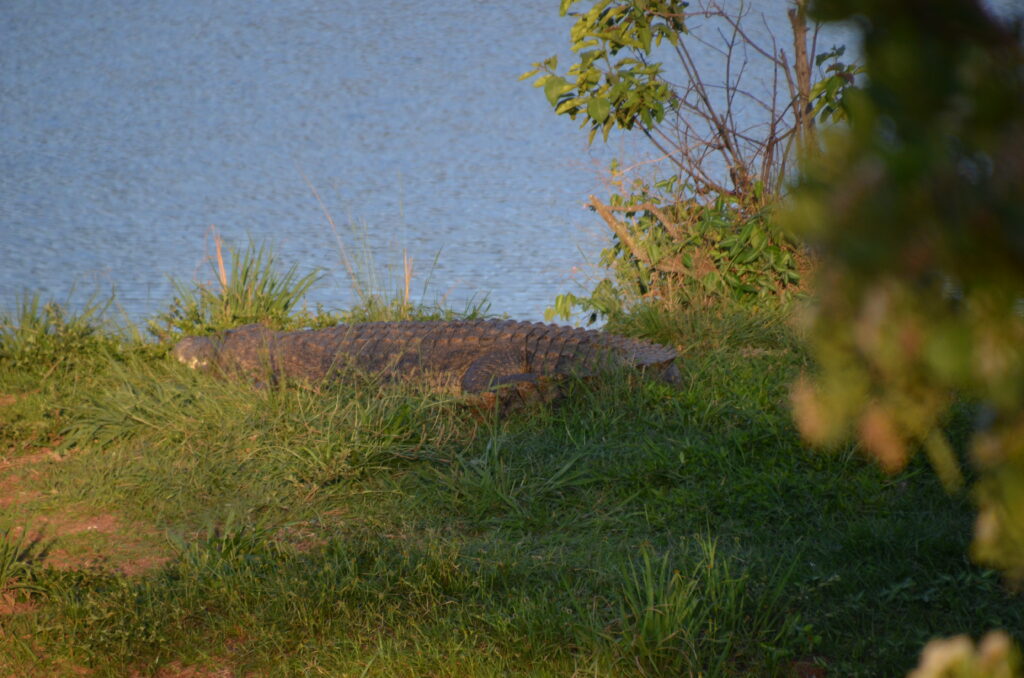
With a bit of luck you’ll see hippos in the streets in the evening. What matters: keep your distance, don’t crowd them, never stand between an animal and the water, and don’t force a “selfie moment.”
Finishing in Durban or the Drakensberg
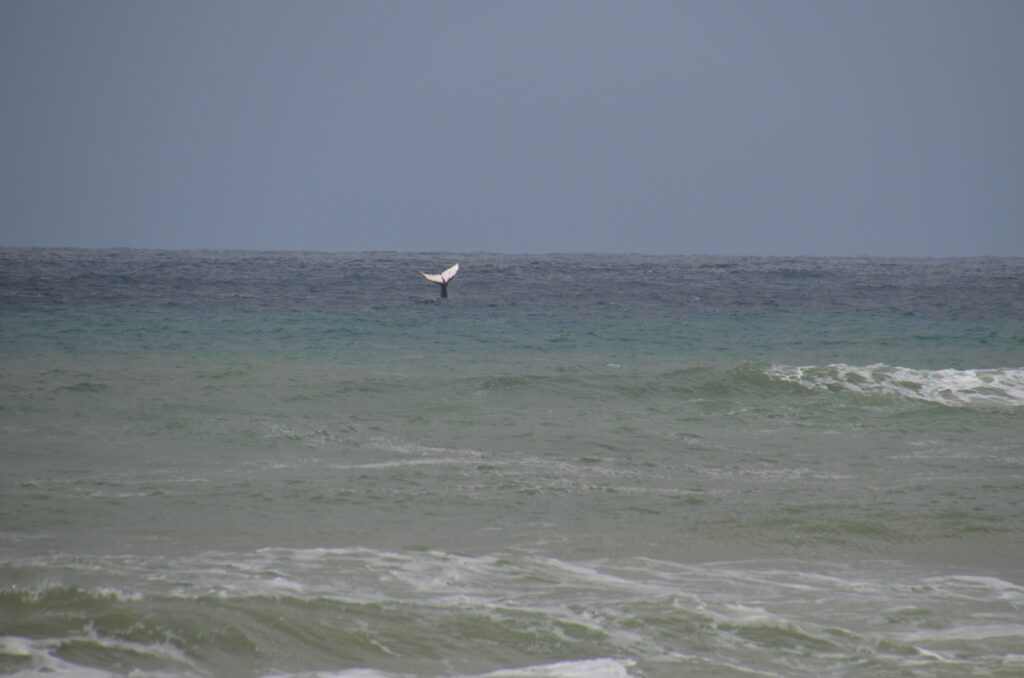
- Durban is logistically simple and a pleasant finale if you’d still like a city-and-coast evening.
- The Drakensberg suits you if you’d rather exhale into nature than into a city. In that case, swap Durban for a night in the mountains and plan your departure accordingly.
FAQ
How many nights in Kruger make sense on a 14-day trip?
Four nights is ideal. It gives you safari depth without overloading the route.
Is self-drive possible in Kruger, or do you need ranger drives?
Self-drive works very well. Ranger drives are an upgrade if you want more context and guided dynamics.
Is a night drive in Kruger worth it?
Yes, very much so. Animal behaviour changes noticeably after dark. But never on your own — that’s not permitted.
What’s the advantage of going north to south in Kruger?
You get more variety in landscape and wildlife. The experience also builds up beautifully as a story arc.
Can Graskop and eSwatini fit into the 14 days?
Yes — one night in Graskop and two nights in Mlilwane works very well.
What can you do in Mlilwane?
Horse riding, hiking, relaxing by the pool, and a generous buffet in the evening. Trips to other parks are also possible.
Are hippos dangerous in St Lucia?
Hippos are animals, and animals run on instinct — often shaped by bad experiences with people. Distance and respectful behaviour are essential, especially at night.
St Lucia or Sodwana Bay — which suits better?
St Lucia is versatile and ideal for iSimangaliso. Sodwana leans more toward “sea and reset,” often with a snorkelling focus.
Is Hluhluwe-iMfolozi worth adding to Kruger?
As an addition, yes. As a substitute, no. Hluhluwe is hilly and sightings aren’t always straightforward.
Durban or the Drakensberg to finish?
Durban is easy for departures and a bit of an urban feel. The Drakensberg is better if you want the trip to wind down quietly, close to nature.