Photo by: duncan-mcnab-DcpLhoT5NvE-unsplash
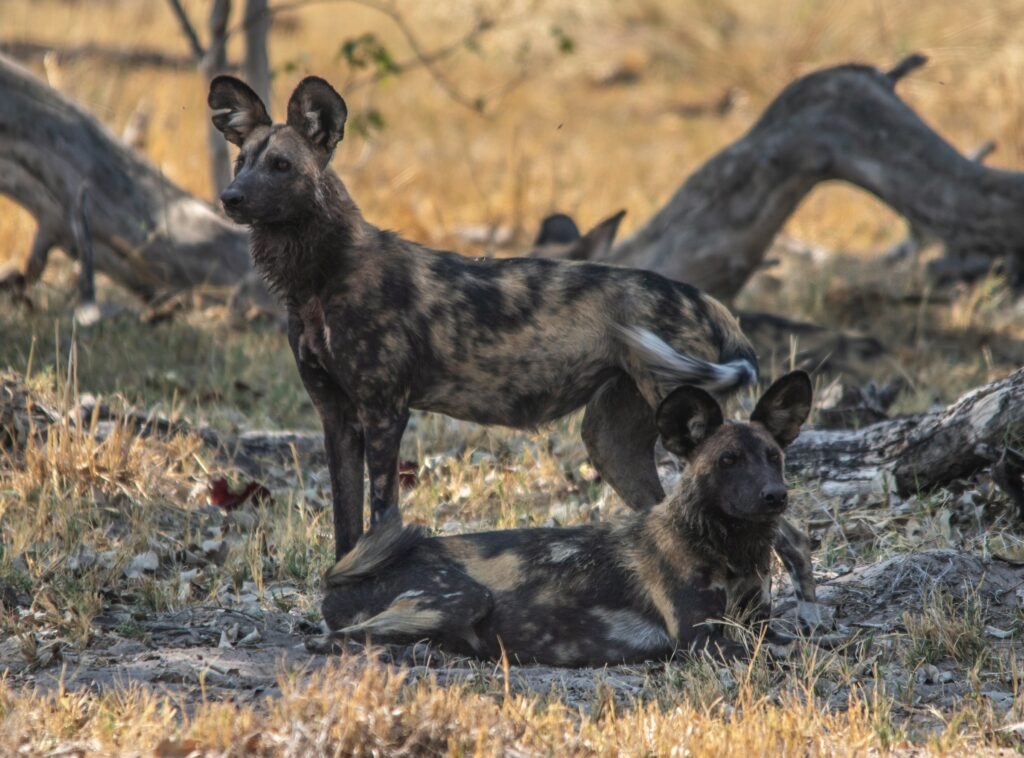
Botswana is a dream destination. The government has leaned into exclusivity from the start — which is also why a Botswana trip tends to cost more than one in South Africa. In Botswana (and in Namibia too) there are regions we don’t travel with clients as standard: the Kalahari Desert, the Kgalagadi Transfrontier Park, and the area between Moremi and Kasane. That doesn’t mean we won’t happily plan it for you — but these are demanding trips that call for a certain adventurous spirit.
The Chobe River and the Okavango Delta are both spectacular — but they’re two completely different worlds. Chobe is big, powerful, “earthy,” and rich in visible wildlife density. The Okavango Delta, by contrast, is quieter, more layered, water-carried, and feels like a nature poem that doesn’t push itself on you — it unfolds.
We can arrange both (and usually do), so it helps to know the differences before deciding: where do we go first?
Chobe National Park at a glance
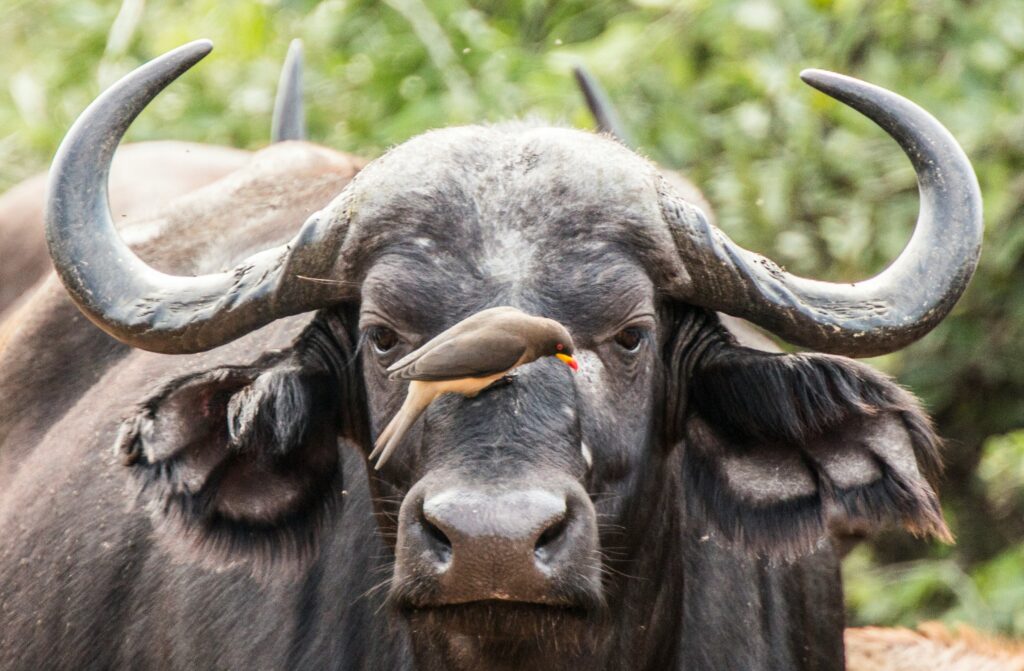
Chobe is many people’s first encounter with Botswana — and for good reason. The region is known for its exceptionally high elephant density, especially along the river. Safari here is often immediate: you see plenty of animals, sometimes so close you find yourself speaking more quietly without meaning to.
What makes Chobe NP stand out
- River safari: Boat cruises are a genuine highlight — especially in the late afternoon, when the light softens and the animals come down to the water.
- Big herds, powerful scenes: elephant, buffalo, often lion too — Chobe can feel like a nature documentary in real time (much like Etosha National Park in Namibia).
- A great “welcome energy”: if you’ve never been to Botswana, this is where you quickly understand why the country has such a strong reputation.
Who Chobe suits especially well
- Travellers who want to see a lot and love quick, rewarding sightings.
- Anyone who likes river and wildlife density in one package.
- People who like to start a trip with a “here we go” feeling.
Okavango Delta at a glance
The Okavango Delta is its own category entirely. It’s a living system of waterways, islands, papyrus, lagoons, wildlife, and light. Safari here doesn’t just happen on the road — it happens on the water, and above all, on nature’s own rhythm.
What makes the Okavango so special
- Waterscapes and island living: many camps sit in genuine seclusion. When we stay in one of the tented camps, you’re right in the middle of it — you might hear hippos grazing at night and not get a wink of sleep :D.
- Safari as a mood, not a checklist: you don’t just experience animals here, but space, sound, birdlife, silence — and that particular Delta magic. This isn’t about ticking off the Big Five — though with Africanrovers, it’s never really about ticking boxes anyway.
- Mokoro and quiet paths: in many areas you can travel by mokoro (a traditional dugout canoe — these days made of fibreglass) — one of the quietest and most wonderful ways to experience Africa.
Who the Okavango Delta suits especially well
- Travellers looking for depth.
- Couples, honeymooners, or anyone who values privacy.
- Anyone willing to factor in the logistics and budget for something truly special.
Deciding by travel style
To help you reach a clear decision faster, here’s a practical way to think about what really matters to you.
1) You love water and boat trips
- Start with Chobe if you want to experience the river “big and alive”: wide open water, plenty of animals along the banks, classic boat-safari feeling.
- Start in the Okavango if you’d rather experience water as a “world of channels and islands”: quiet, intricate, intimate.
Rule of thumb:
- “I want photos with plenty of animals by the river” → Chobe
- “I want stillness, mokoro, Delta atmosphere” → Okavango
2) You want big herds and dramatic moments
Then Chobe is usually the stronger opener. It gives the start of your trip a real punch — and you’ll very quickly understand why Botswana makes safari fans so happy.
3) You want exclusivity, quiet, and a “once-in-a-lifetime” feeling
Then we start in the Okavango. It sets the tone: slow, high-quality, deep. Many travellers experience the Okavango as the “crowning finale” — but just as many love starting there, because it switches your nervous system straight to “arrived” mode.
3) You’re travelling with family or safari first-timers
- Chobe NP first is often ideal: it’s more accessible, the experience is immediate, and the rhythm of a safari becomes clear quickly.
- The Okavango Delta then becomes a beautiful second step.
Order-of-travel scenarios
Here are three scenarios that have proven themselves in practice. Think of them as mental models.
Scenario A: Chobe first, Okavango after
Who it’s for: first-time visitors, families, “we want to see a lot,” or anyone who wants to start with a “wow” factor.
Advantage: you enter through wildlife density and river safari, and finish in Delta magic.
Feeling: from powerful → to poetic.
Scenario B: Okavango first, Chobe after
Who it’s for: couples, honeymooners, travellers who want a slower start and prefer to arrive gently first.
Advantage: you begin with the more exclusive, quieter experience — afterwards, Chobe feels like the lively finale.
Feeling: from still → to spectacular.
Scenario C: Okavango as an “island” in the middle
Who it’s for: travellers who want both, but need balance.
Advantage: the Okavango becomes the emotional centrepiece — Chobe and another building block (e.g. Savuti/Moremi, depending on style) frame the Delta on either side.
Feeling: dramatically well-rounded, especially over 10–14 days.
Logistics
Botswana isn’t a country you drive through “on the side.” Especially in the Okavango, logistics play a real role — not as a problem, but as part of the experience.
What to generally expect:
- The Okavango often means a flight, or very long drives. Many Delta camps are only reachable by light aircraft. That’s part of the exclusivity: you’re not there by chance, you’re there deliberately.
- Chobe is usually easier to connect to. Depending on how you combine Botswana into your trip (say, via Livingstone/Victoria Falls or via Namibia), Chobe often feels more straightforward logistically.
- Travel timing shapes the experience. Water levels, vegetation, and animal movement all shift through the year. That’s true for both regions, but it’s especially noticeable in the Okavango.
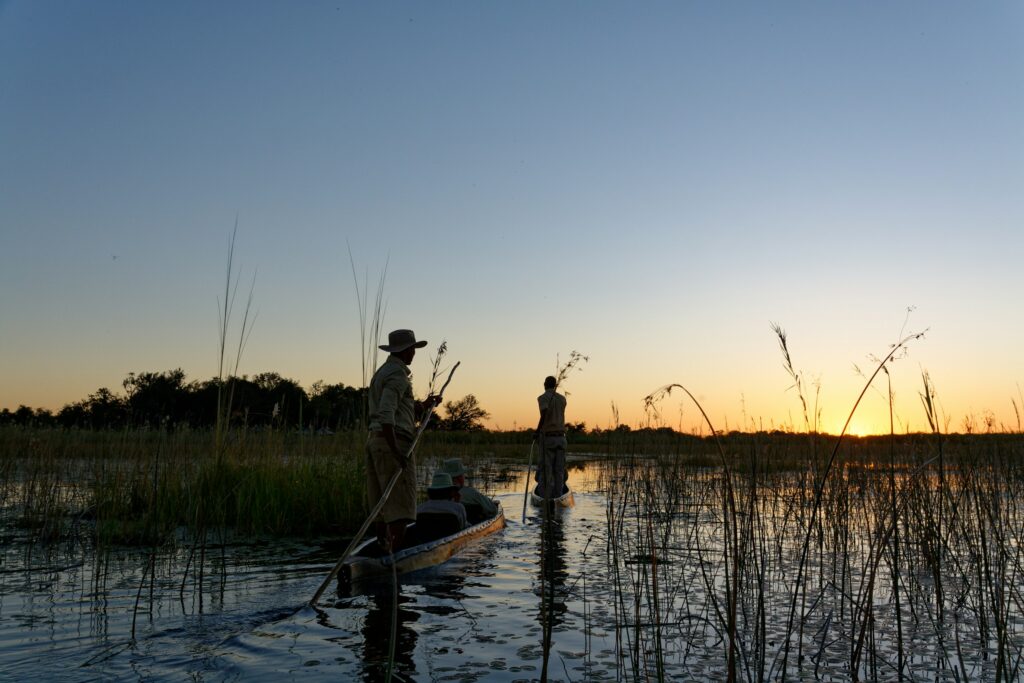
Photo by: colin-watts-newE0057quQ-unsplash
FAQ
How expensive is the Okavango Delta?
Without getting into numbers, the honest answer is: the Okavango Delta usually sits in a higher price bracket than Chobe NP, because the camps tend to be remote, logistics are more involved (often light aircraft), and the whole infrastructure is built to be more exclusive.
In return, you generally get more privacy, a more immersive nature experience, and a particular kind of quiet. You can also plan the Okavango “smart” — for instance with fewer nights, but very deliberately chosen ones.
Can Chobe and the Okavango be combined well in one trip?
Yes — it’s actually one of the loveliest combinations in southern Africa, because it brings together two completely different safari styles: river and herds in Chobe, water-labyrinths and islands in the Okavango.
Which order is better for first-time visitors?
For many people, Chobe first is easier, because the experience is immediately tangible. But if you’re more the quiet, savouring type, Okavango first can be the more magical way in.
Do I even need to choose?
Not necessarily. It comes down to your budget and how much time you have. From around 10 days in Botswana, you can usually fit both in comfortably — with less time, it’s generally better to focus on one.
The bottom line
- Chobe first, if you want to start with wildlife density, river safari, and powerful energy.
- Okavango first, if you want stillness, exclusivity, and that “Delta feeling” as your opener.
- And if you love both: let the Okavango become the dramatic heart of the trip — then the whole journey feels like a composition, not a list.